

Travel content is often built around the idea that the right itinerary makes all the difference. Choose the right destination, follow the right plan, schedule the right activities, and the experience is supposed to unfold smoothly, delivering what it promises as long as nothing goes wrong.
As travel creators, we understand why this model exists. Planning matters, recommendations matter, and itineraries can genuinely help families feel more confident before leaving. We use them ourselves, and we also share destinations, hotels and activities that have worked well for our family, because we know how valuable concrete examples can be when you are trying to imagine what a trip might look like with neurodivergent children.
What we learned over time, however, is that no itinerary, no matter how well thought out, can fully capture what travel actually becomes once it begins.
When preparation meets reality
We prepare our trips carefully, because traveling with neurodivergent children requires anticipation. We think about accommodation, daily rhythm, distances, transportation and activities, not to optimize the experience, but to make it possible in the first place.
And sometimes, preparation pays off in the best possible way.
Some destinations turn out to be exceptionally well suited to our family.
Certain places offer the right balance between stimulation and flexibility, the right pace, the right type of accommodation, and an environment that supports rather than drains. When this happens, we say it clearly.
We name the destination, we explain why it worked, and we share the elements that made daily life easier for us, because we know that other families are looking for exactly this kind of information.
But even in those cases, reality never unfolds exactly as planned.
Fatigue builds up, reactions change from one day to the next, and environments that felt manageable at first can become demanding over time.
What looked simple on paper sometimes requires adjustment once novelty wears off and energy levels drop.
This does not mean the destination was a bad choice. It simply means that travel is a living process, not a fixed scenario.
Why perfect itineraries rarely tell the whole story
Perfect itineraries suggest that success depends on control.
They imply that if enough thought goes into planning, the trip will unfold smoothly, and that difficulties are signs of poor preparation rather than an inherent part of the experience.
For families traveling with neurodivergent children, this idea quickly reaches its limits. Energy levels fluctuate, sensory thresholds change, and what feels manageable in the morning may no longer be so in the afternoon.
Delays happen, spaces feel different than anticipated, and transitions require more effort than expected.
When itineraries are presented as guarantees, they leave little room for these realities. Each deviation then feels like a problem to solve instead of a signal to adapt. Over time, this approach can create more pressure than support.
We found that the more an itinerary needed to be protected, the less space there was for our family to adjust to what was actually happening.
What documenting travel really means for us
Documenting travel does not mean refusing to plan, recommend or share practical advice. It means adding depth and context to those elements, rather than presenting them as final answers.
When we document a trip, we talk about what worked, but also about what needed to change along the way. We explain how rhythm evolved, how we adjusted expectations, and how we navigated moments where the plan no longer fit the situation.
We share tips, but we explain why they helped us in a specific context, instead of presenting them as universal solutions. We recommend destinations when they have genuinely worked for our family, while being transparent about the conditions that made them suitable for us at that moment.
This approach allows other families to project themselves realistically, rather than trying to reproduce an experience that may not translate to their own situation.
Moving away from performance-driven travel
Travel is often evaluated in terms of achievement. How much was seen, how much was done, how full the days were, and whether the trip “lived up” to expectations.
For families traveling with neurodivergent children, this performance-driven lens can quickly become a source of exhaustion. It leaves little room for slower rhythms, pauses, early returns or changes of plan, even when those adjustments are exactly what makes the trip possible.
Over time, we learned to redefine what a successful trip looks like.
Sometimes, success means doing less but experiencing it more comfortably. Sometimes, it means skipping an activity entirely to preserve energy for the following day.
Sometimes, it means returning to accommodation earlier than planned because continuing would come at too high a cost.
By documenting these choices, we show that they are not failures, but conscious decisions rooted in lived experience.
Why this perspective matters to other families
Families traveling with neurodivergent children already carry a significant mental load. They do not need idealized narratives that suggest everything can work perfectly with the right plan.
What they often need are reference points that feel honest and grounded. Seeing how another family navigated a destination, adjusted an itinerary or rethought their expectations can help them imagine their own version of a trip, without pressure to replicate someone else’s experience exactly.
By documenting travel as it is lived, we aim to offer clarity rather than certainty. Some families will recognize themselves in our experiences, others will not, and that is part of the process.
The goal is not to provide answers, but to expand what feels possible.
Conclusion
We chose to document travel because it allows us to share destinations, itineraries and tips while remaining faithful to reality.
When something works well for our family, we say it clearly and explain why. When it requires adjustment, we talk about that too, because adaptation is not a flaw in the journey, it is part of it.
Traveling with neurodivergent children is not about finding a flawless formula that works every time. It is about navigating real environments, making ongoing choices and preserving what makes continuation possible from one day to the next.
By documenting travel as it is lived, rather than presenting it as a finished product, we hope to offer other families something both practical and honest: experiences they can learn from, adapt and shape into their own way of traveling.
Editorial Notes
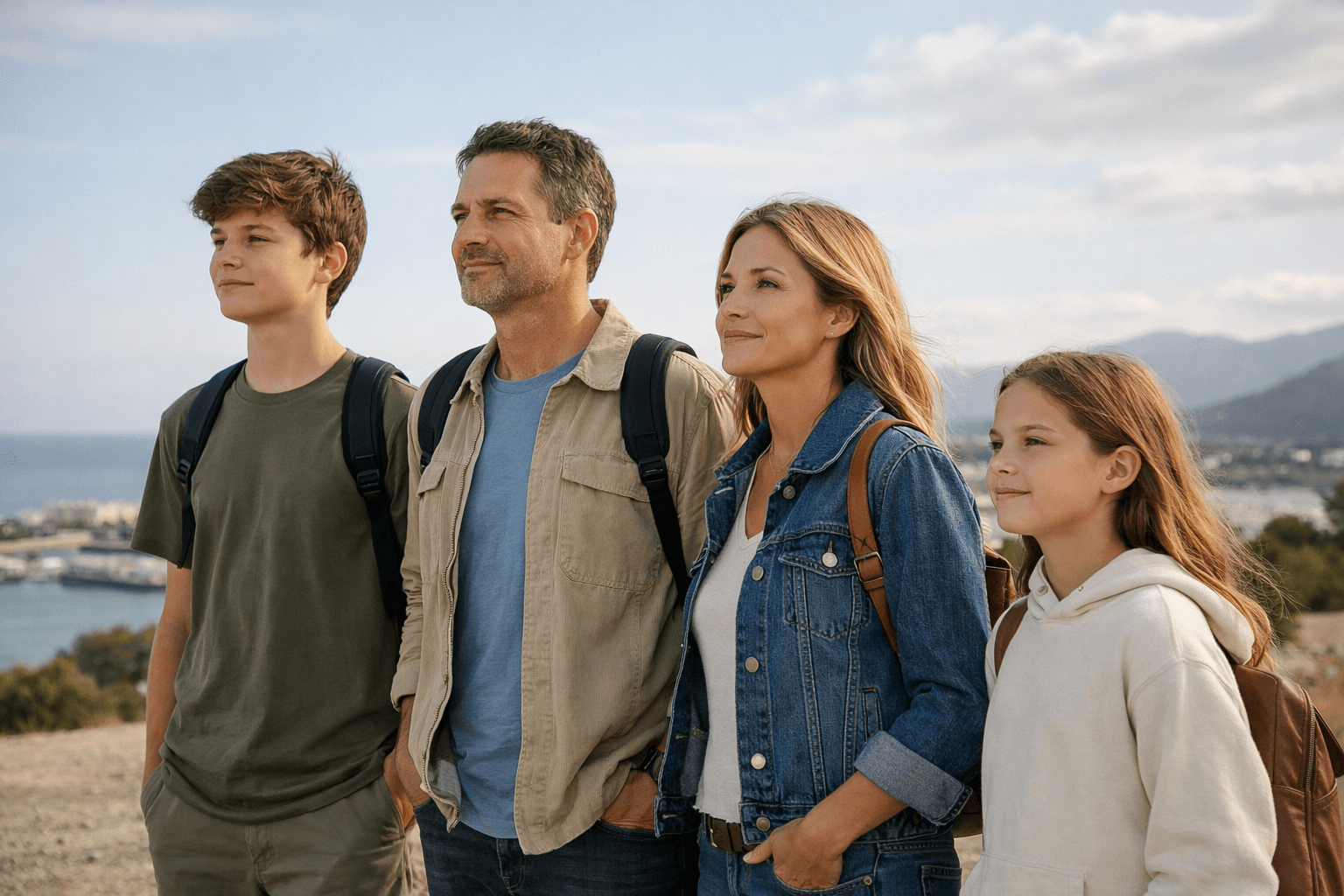
The images used in this article are AI-generated and serve illustrative purposes only. They are intended to help readers visualize travel situations and environments discussed in the text.
Whenever we personally visit a destination, we rely on real photographs and firsthand observation. Transparency and trust are central to our editorial approach.
Blog
This section provides an overview of the blog, showcasing a variety of articles, insights, and resources to inform and inspire readers.
-

Rethinking Hotels for Neurodivergent Families
For many neurodivergent families, a hotel is not simply a place to sleep between activities.…
-
12 Destinations Around the World Where Neurodivergent Families Can Travel with Confidence
We know the feeling. The knot in your stomach before booking a flight. The hours…
-

Why We Chose to Document Travel Instead of Chasing Perfect Itineraries
Travel content is often built around the idea that the right itinerary makes all the…


Laisser un commentaire